
About Rami Mikhail
From Employment to Entrepreneurship
Rami Mikhail did not begin his career with capital, influence or certainty. He began inside systems built by others.
His early professional life was shaped by employment in environments where performance mattered and security was limited. He worked in retail, warehouse operations, and construction, taking on physically demanding shift-based roles. The work was honest and demanding. The pay was hourly. The progression was defined by someone else.
These years were not glamorous, but they were clarifying.
They provided an inside view of how organisations operate from the ground level. How managers think. How incentives drive behaviour. How pressure reveals character. He observed how systems reward compliance and limit autonomy. He understood quickly that effort alone does not create freedom.
Ownership does.
What stood out early was not just ambition, but awareness. Rami recognised that if he wanted leverage, scale and long-term control over his direction, he would need to take risk. Real risk.
From Employment to Entrepreneurship
In February 2016, that risk became tangible.
With approximately 1,500 USD to his name, no secured clients and no guaranteed income, Rami signed a lease on his first office. The rent was 4,500 SEK per month, roughly 500 USD, with three months paid upfront. It was effectively all of his available capital. Credit cards covered what savings could not.
There was no safety net. No investors. No contracts signed. He had one month left before his remaining funds would be depleted.
Before taking the office, he had been cold -calling daily from home for over a month.
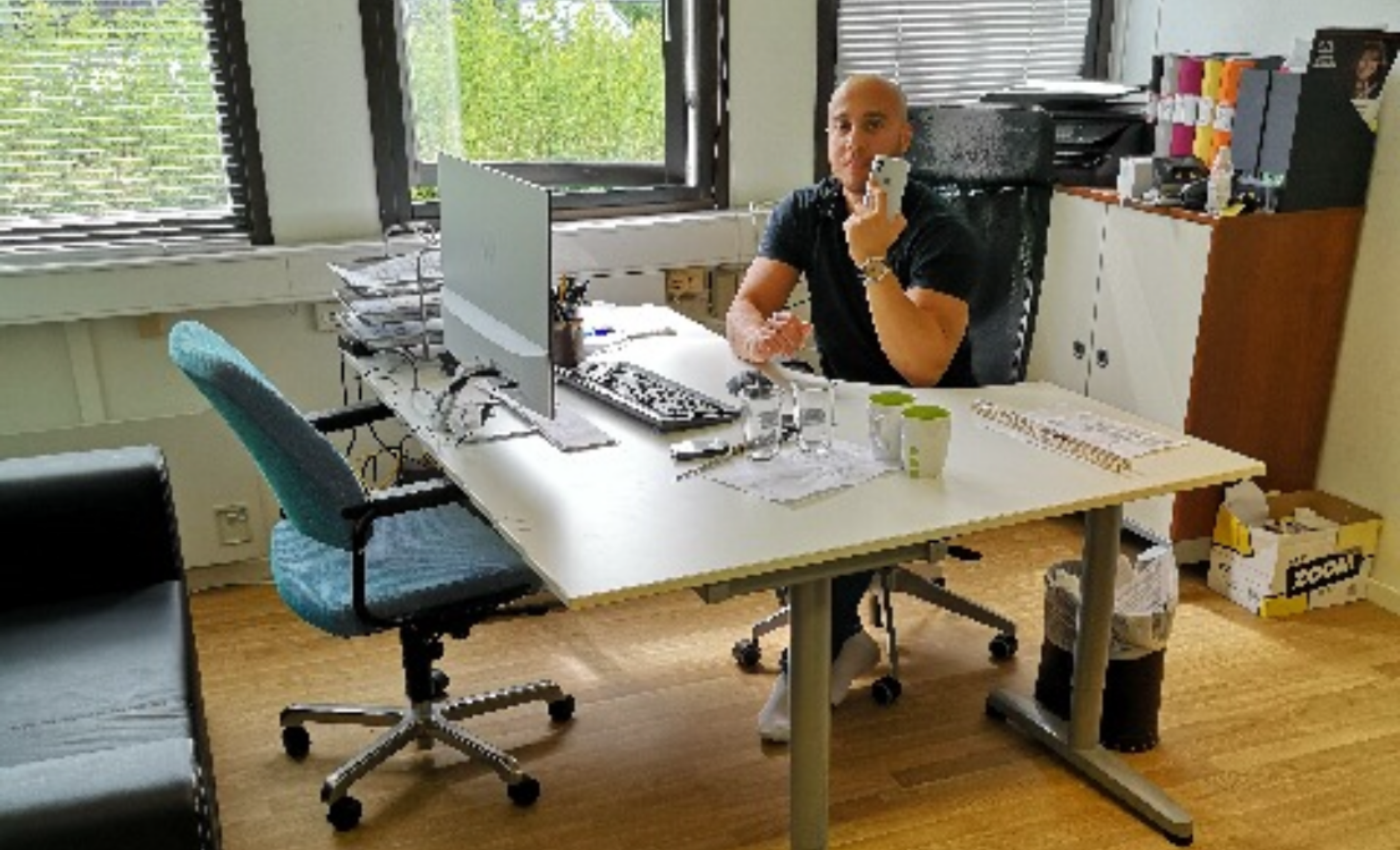

Zero results. After securing the office, he continued cold calling every day for another month. Still no results.
The office itself was modest. Functional. No luxury. No branding. Just a desk, a phone and intent. The view was ordinary. The furniture was basic. There was nothing impressive about the environment. The only thing substantial was the commitment.
Every call carried weight. Every rejection had consequence. Time was not abstract. It was measured in rent cycles and bank balances.
Eventually, just before the money ran out, he secured his first client. That moment did not change everything overnight. But it proved one thing. Persistence under constraint can create traction where comfort cannot.
Building a Recruitment and Construction Brand From Nothing
With the first client secured, the real work began.
Rami entered the recruitment and construction sectors with an operator’s mindset. These industries are unforgiving. Recruitment requires trust, speed and credibility. Construction requires coordination, compliance, delivery and accountability. Margins are earned through discipline, not optimism.
There were no inherited systems. No existing teams. No brand equity. Every relationship had to be built. Every contract had to be earned. He built methodically.
Cold outreach turned into repeat clients. Repeat clients turned into referrals. Referrals turned into scale. Systems were implemented. Teams were hired. Standards were set.
The business grew into a multi-million dollar recruitment and construction brand.
What began as survival evolved into structured growth. Scaling required a different level of leadership. Payroll replaced invoices as the primary pressure. Responsibility expanded beyond personal risk to collective stability. Decisions affected employees, partners and clients.
Growth brought visibility. It also brought weight.
Building Scale and Carrying Responsibility
As revenue increased, so did complexity.
Leading a people-heavy organisation means managing more than numbers. It means managing emotion, expectation and accountability.
It means making decisions with incomplete information and standing by them. It means navigating economic shifts, labour shortages and regulatory change without losing stability.
Rami learned the invisible cost of growth.
The pressure to maintain performance. The isolation of executive decision making. The discipline required to separate emotion from logic when stakes are high.
He learned to think long term in environments that reward short-term reaction. He learned to protect cash flow, reputation and morale simultaneously.
These years shaped his philosophy more than success did. They reinforced the importance of patience, structure and rational decision making under pressure.
For many entreprenurs starting, scaling, and building a business represents the finish line. Build value. Exit. Enjoy the reward. Rami viewed that milestone differently.
Evolution From Founder to Investor
With scale came perspective.
Having built and stepped back from operational intensity, he shifted from builder to allocator. Instead of focusing on a single organisation, he began focusing on capital itself.
Investing became the next evolution.
This transition was not accidental. It was built on lived experience. Having started with nothing, risked personal capital and carried the responsibility of growth, he understood what resilience looks like in practice.
His investment philosophy is grounded in pattern recognition, behavioural insight and timing. He looks beyond presentations and into people. How they respond to pressure. How they adapt to uncertainty. Whether they operate with discipline or emotion.
Instead of exiting entrepreneurship, he multiplied it. Capital became leverage.
Investing allowed him to expand geographically. He lived in multiple countries. Built international relationships. Diversified exposure across markets and sectors. Strengthened networks and opportunity sets.
The results have been significant. But more importantly, they have been strategic.
Exposure, Perspective and Introspection
With geographic mobility came perspective.
Operating internationally exposed Rami to economic contrasts that statistics alone cannot convey. Cities where financial power and structural poverty exist within the same skyline. Territories where access is inherited rather than earned. Environments where opportunity is visible but unevenly distributed.
Travel created space for introspection.
Without the daily pressure of operations, he began analysing broader systems. The conditions shaping inequality. The proximity of wealth and scarcity. The psychological and structural dynamics that determine who advances and who remains constrained.
This reflection led to creative exploration.
The Turn Toward Storytelling
Documentary filmmaking became an extension of observation.
Rather than speaking about inequality from a distance, Rami chose to document it. His first project, Worlds Apart: Between Shadows and Towers, explores the coexistence of rich and poor within the same urban environments. It examines contrast without sensationalism. It invites reflection without prescribing solutions.
Through film, he applies the same discipline that shaped his business career. Patience. Attention. Respect for complexity. An understanding that reality rarely fits into simplified narratives.
Storytelling became another form of capital. Cultural capital.
Toward Legacy and Long-Term Impact
Today, Rami operates across entrepreneurship, investment and documentary work. Each stage informs the next.
- The early years of shift work and physical labour from 2013
- The rented office in 2016 with one month left to survive.
- The cold calls with no response.
- The first client secured before funds ran out.
- The scaling of a multi-million dollar business.
- The transition into investing across borders.
- The observation of global inequality.
These are not isolated events. They are sequential evolutions.

Looking ahead, this journey continues toward the creation of Ramses House of Hope, planned for 2029
The foundation represents a structured commitment to access, opportunity and long-term social impact. It reflects an understanding that capital, when deployed with intent, can influence more than balance sheets.
Rami’s story is not one of sudden success. It is a story of risk taken without certainty, discipline applied without recognition and evolution built through experience.
It is not a pivot. It is a continuation.